
Most drivers think about tire wear and fuel efficiency as two separate issues, however they're actually closely connected – by your drivetrain.
The way your vehicle delivers power affects which tires work the hardest, how evenly tread wears, and how much energy is lost before that power reaches the road. This means your drivetrain can influence both how long your tires last and how efficiently your vehicle uses fuel (gas or electric).
Your drivetrain affects tire wear by determining which wheels receive power and how that power is distributed. It affects fuel efficiency because energy is lost through the drivetrain, and systems with more components such as AWD and 4WD typically add weight and mechanical friction.
WHAT IS THE DRIVETRAIN’S ROLE?
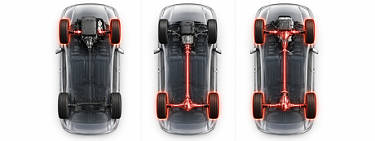
Your drivetrain is the system that sends power from the engine to the wheels.
Types of drivetrains include:
- Front-wheel drive (FWD)
- Rear-wheel drive (RWD)
- All-wheel drive (AWD)
- 4-wheel drive (4WD)
We explain your drivetrain in detail here:
WHAT IS A DRIVETRAIN?HOW DOES DRIVETRAIN TYPE AFFECT TIRE WEAR?
Different drivetrain layouts place different demands on your tires.
Front-Wheel Drive (FWD)
In a front-wheel vehicle, the front tires handle steering and most of the power delivery. Because they do more work, front tires typically wear faster than rear tires on a FWD vehicle.
Front-wheel drive is the most common option for passenger vehicles. They typically offer better fuel efficiency, are lighter, and cheaper to produce. However, all-wheel drive has become very popular in recent years, especially with crossovers.
WHAT DRIVETRAIN IS BEST IN SNOW?Rear-Wheel Drive (RWD)
In a rear-wheel drive vehicle, power and steering is delivered to the rear tires. The rear tires are under great stress during acceleration. This means that the rear tires will wear faster on a RWD vehicle.
You will see RWD on sports cars and muscle cars. It is also found on some SUVs and pickup trucks. This is because this drivetrain allows for an even weight distribution and therefore better handling (in normal conditions).
All-Wheel Drive (AWD) and Four-Wheel Drive (4WD)
Both all-wheel and four-wheel drive systems spread power across all four tires which can help support more balanced traction.
In both AWD and 4WD vehicles, front tires tend to wear a little faster due to steering and braking demands. In general, these drivetrain types tend to wear faster or more unevenly due to added weight and power distribution.
These drivetrain types usually require more frequent rotations to maintain uniform tread depth while also protecting driveline components.
All-wheel drive vehicles are becoming very popular, especially in crossovers. 4-wheel drive vehicles tend to be off-road equipped vehicles such as SUVs and pickup trucks.
DRIVETRAIN TYPE AT A GLANCE
| Drivetrain | Which tires wear faster | Efficiency Impact |
|---|---|---|
| FWD | Front tires | Typically most efficient |
| RWD | Rear tires | Varies by vehicle |
| AWD/4WD | Often front tires but all 4 can wear irregularly | Often less efficient due to added weight and mechanical friction |
This table is a quick guide, but actual wear depends upon many factors, including:
- Alignment
- Tire pressure
- Suspension condition
- Rotation schedule
- Driving style
- Vehicle setup
Improper alignment and tire air pressure can reduce fuel economy.
CAN DRIVETRAIN ISSUES CAUSE UNEVEN TIRE WEAR?
Yes, uneven tire wear can be caused by drivetrain issues. It could also be caused by related systems such as the chassis, wheel alignment, or suspension.
If power is not delivered smoothly to your tires, they may not stay in consistent contact with the road. Worn components, imbalance, or wheel misalignment can cause tire cupping (also called scalloping).
Misaligned tires create uneven stress on your tire’s tread while worn shocks and suspension components can cause the tire to bounce and wear unevenly.
Check out our tire wear pattern guide for more information with handy visuals.
This is why uneven treadwear can be a clue that something beyond your tires needs attention.
SIGNS YOUR DRIVETRAIN OR RELATED COMPONENTS MAY BE AFFECTING YOUR TIRES
Watch for symptoms like:
- Uneven treadwear from one tire to another
- Cupping or scalloping across the tread
- Vibration while driving
- Vehicle pulls to one side
- Noticeable drop in fuel economy
Tire cupping, sometimes accompanied by vibration, tire noise, and drifting or veering, can be caused by wheel alignment or imbalanced tires. Improper wheel alignment and tire air pressure can also lower fuel economy.
America's Tire offers FREE balance services to customers. Make an appointment today to check if this is causing your uneven tire wear.
AMERICA'S TIRE FREE BALANCE SERVICESome America's Tire locations now offer alignment services, too! Check to see if your local store is participating.
AMERICA'S TIRE ALIGNMENT SERVICESHOW DRIVETRAIN AFFECTS FUEL EFFICIENCY
Your drivetrain does more than move your vehicle; it also affects how much of your fuel’s energy reaches the wheels.
FuelEconomy.gov explains that only about 12-30% of the energy in gasoline is used to move a conventional vehicle down the road. Part of the rest is lost to engine and drivetrain inefficiencies. Energy is also lost in the transmission and other parts of the drivetrain.
More Drivetrain Components Can Mean More Energy Loss
4WD and AWD vehicles require that the engine work harder. This also increases losses in other components. These drivetrain systems include extra components that increase weight and mechanical friction which can negatively affect fuel economy.
This doesn’t mean AWD and 4WD are bad. It just means there is a tradeoff between better traction capability and fuel efficiency.
Tire Condition Also Affects Efficiency
Your tire’s condition also affects fuel efficiency.
Healthy, well-maintained tires perform best. Improperly aligned or underinflated tires can reduce fuel economy by increasing rolling resistance. Even if your drivetrain is working properly, poorly maintained tires can still drag down MPG (or your electric vehicle’s range).
America's Tire offers FREE tire inspections to everyone, not just customers who purchase tires from us.
SCHEDULE FREE TIRE INSPECTIONTHE CONNECTION BETWEEN TIRE WEAR AND FUEL EFFICIENCY
Tire wear and fuel efficiency influence each other more than many drivers realize.
Uneven power delivery to your tires can cause irregular or uneven treadwear.
Uneven treadwear can cause tires to not roll smoothly or maintain even contact with the road, increasing rolling resistance. Smooth tires are efficient because they require less energy to roll. Issues such as cupping can interrupt continuous road contact, for example. This lowers fuel efficiency as your vehicle must use more fuel to overcome these challenges.
In summary: drivetrain layout affects tire wear and tire condition can affect fuel efficiency.
HOW TO HELP PROTECT TIRE LIFE AND FUEL EFFICIENCY
Extending your tire’s lifespan and encouraging good fuel efficiency comes down to good tire and vehicle maintenance.
Rotate your tires regularly
We recommend rotating your tires every 6-8,000 miles, or every other oil change. AWD and 4WD vehicles may need more frequent rotations. Drivetrain type influences proper tire rotation pattern.Check alignment if vehicle doesn’t drive straight or you see uneven tire wear
Vehicles pulling to one side or uneven tire tread could indicate an alignment issue, which hurts fuel economy and causes unnecessary tire stress.We recommend getting a wheel alignment every 6-10,000 miles (or once a year), depending on the severity of your commute.
- Regularly inspect your tires
You should self-inspect your tires regularly, once or twice a month and before long trips. Uneven wear patterns, vibration, or drop in ride quality can point to problems that are easy to address if caught early.
You can also come in for a FREE tire inspection by tire experts at your local store.
FIND MY AMERICA'S TIRE STOREWhy This Matters For Drivers
Understanding how your drivetrain affects treadwear and fuel efficiency can help you make smarter maintenance decisions. The payoff can include:
- Longer-lasting tires
- More even treadwear
- Better fuel economy
- Smoother day-to-day driving
- Lower long-term ownership costs
THE BOTTOM LINE
Your drivetrain, your tires, and your vehicle’s fuel efficiency are all connected.
Your drivetrain determines how power reaches the road, affecting which tires wear faster, how evenly the tread holds up, and how much energy is lost along the way. If you add in alignment, tire pressure, and overall tire and vehicle condition, it becomes clear why tire wear and fuel economy rise and fall together.
Need a Tire Check? Need More Help?
If you have any questions or are unsure what you need, drop in or give us a ring. We’ll get you taken care of. Buy and book online and save time in-store!
For more information on this and other tire and wheel services, check out ourYouTube Channel or reach out to us on X, Instagram and Facebook.